Emilia-Romagna
Your Ultimate Online Guide to Discovering Emilia-Romagna
With its authentic charm and unmistakable hospitality, Emilia-Romagna welcomes not only visitors seeking relaxation and city life, but also culture enthusiasts, food lovers and nature aficionados. This region’s history runs deep, and its strategic location has made it an eternally coveted destination—a crossroads of peoples and cultures. As a result, Roman, Byzantine and Renaissance influences are reflected throughout its cities and small settlements, making Emilia-Romagna a destination rich in charm and tradition. Notably, the Middle Ages and Renaissance saw powerful ruling families flourish here, transforming the region’s cities into major artistic and cultural centres.
From medieval castles built by noble families to Renaissance piazzas, from lively seaside towns like Rimini and Cattolica to nightlife capitals such as Milano Marittima and Riccione: Emilia-Romagna is truly multifaceted. Don’t overlook UNESCO World Heritage sites such as Ferrara’s historic centre, Ravenna’s Early Christian monuments, or the arcades of Bologna, famous too for being home to one of Europe’s oldest universities. With all this in mind, it’s easy to see why Emilia-Romagna captivates every visitor, offering an extraordinary variety of experiences to suit all tastes—from culture and gastronomy to nature and relaxation.
Equally remarkable are the culinary traditions, featuring dishes celebrated worldwide such as tortellini, Bolognese ragù, Modena balsamic vinegar and piadina flatbread. Local products like Parma ham and Parmigiano Reggiano have made the region a gastronomic paradise, complemented by folk festivals that celebrate and promote this rich heritage.
Emilia-Romagna is one of Italy’s regions best known internationally for its art cities, welcoming atmosphere, wealth of accommodation and outstanding cuisine. A trip here is truly unique and extraordinary, offering the chance to discover historic sites of major interest, timeless villages steeped in millenary history, and magnificent natural landscapes.
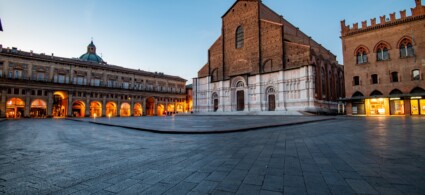
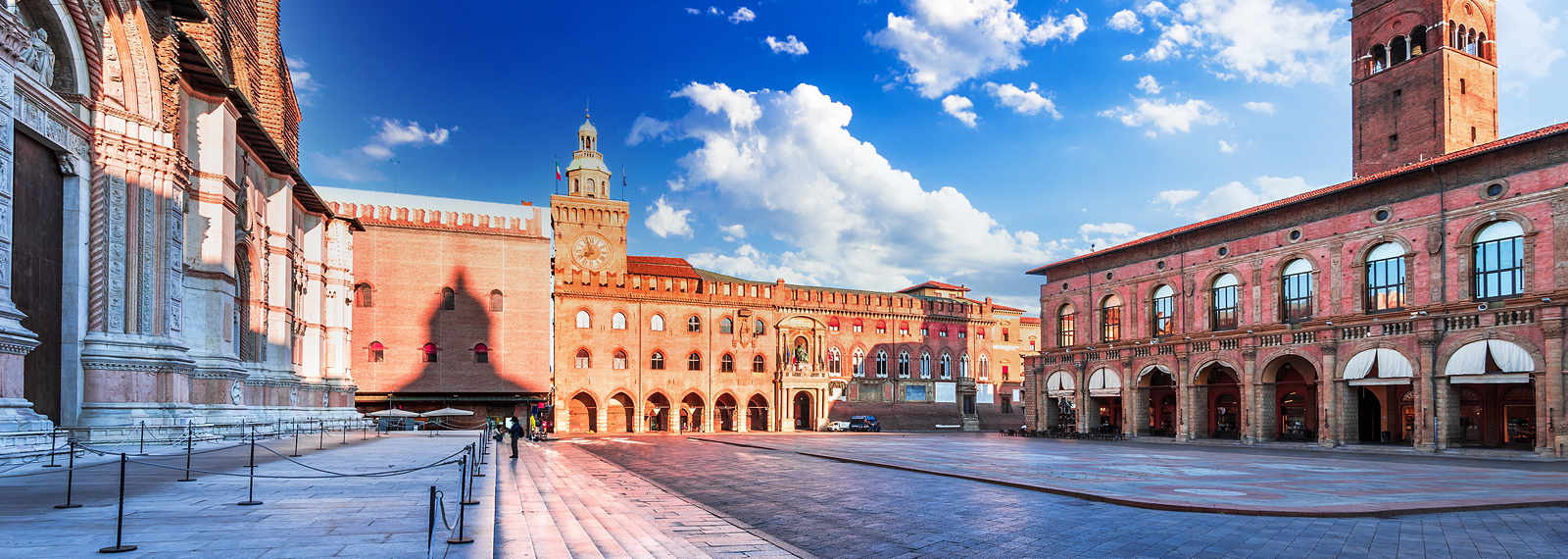
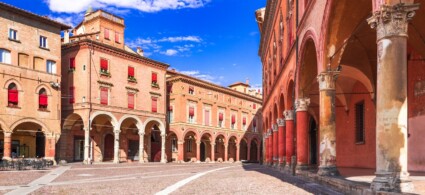
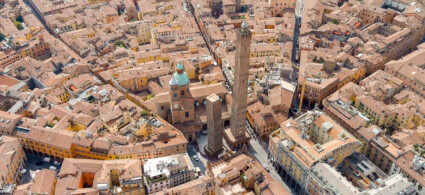
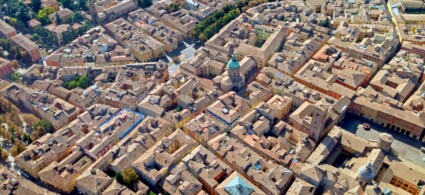
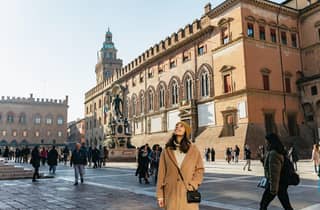
Regional capital, Bologna is famous for its historic university, distinctive arcades and its Two Towers, regarded by many as symbols of the city and its illustrious past. Many visitors begin their Bologna experience in Piazza Grande, home to important historic and religious buildings such as Palazzo del Podestà and San Petronio Basilica, which in 1530 hosted the coronation of Charles V.
Overlooking the city from Colle Guasco is the Sanctuary of the Madonna of San Luca, considered one of the region’s most important religious sites as it houses an icon of the Virgin Mary painted by the evangelist Luke.
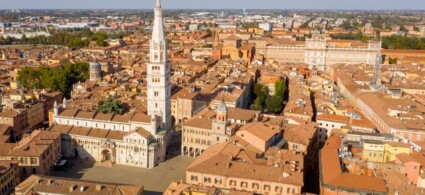
Another city of great charm with a long history is Modena, renowned for its splendid buildings including the Cathedral and the Bell Tower (known as the Ghirlandina), both UNESCO World Heritage sites. The city is also famous for Palazzo Ducale, built by the Este family as a court residence and considered one of Europe’s most opulent and elegant residences. What Modena is known for internationally, however, is undoubtedly the Enzo Ferrari Museum and for being the birthplace of numerous companies that shaped Italian motoring history—Ferrari, Maserati and Pagani.
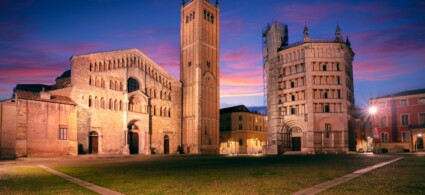
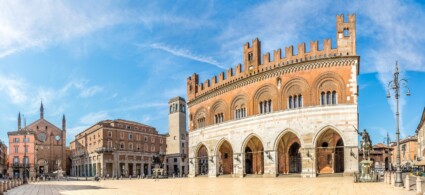
Heading further west, you’ll discover equally splendid and welcoming towns, though often less well-known. Reggio Emilia is the birthplace of the Italian flag, while Parma is celebrated for its magnificent historic centre and as the home of prosciutto crudo. On the Lombardy border lies Piacenza, once capital of the Duchy of Parma and Piacenza and an important cultural hub, as evidenced by sites such as Palazzo Farnese and the Cathedral, which features elegant frescoes.
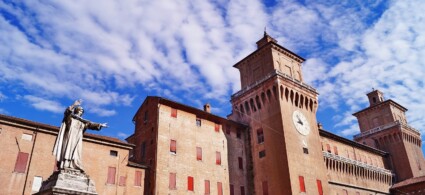
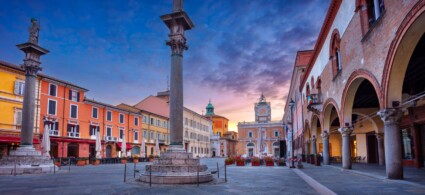
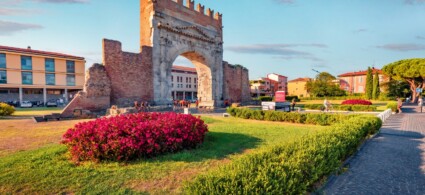
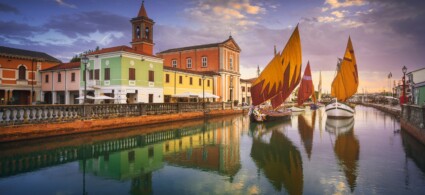
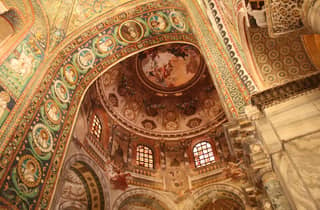
Moving along the Adriatic coast, you’ll find towns like Ravenna and Rimini, renowned not only as beach resorts but also for their significant historical interest. Rimini is known, amongst other things, for the Malatesta Temple, a Renaissance building designed by Leon Battista Alberti as a mausoleum for the Malatesta family, adorned inside by Piero della Francesca, Giotto and Agostino di Duccio. Ravenna, meanwhile, is celebrated for its Early Christian and Byzantine monuments, decorated with stunning mosaics that have earned UNESCO World Heritage status. A virtual tour of Emilia-Romagna’s towns cannot exclude Ferrara, a Renaissance jewel that, with its castle, was governed for centuries by the Este family.
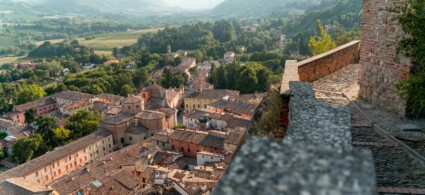
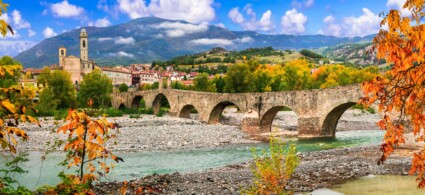
Amongst rolling green hills planted with olive groves and vineyards, Emilia-Romagna preserves numerous villages and hamlets that guard a long history and millenary traditions. Many boast a tumultuous past and served as strongholds for major families, witnessing battles and disputes. Several villages have managed to preserve not only their architectural heritage but also their cultural traditions, earning membership in the “Most Beautiful Villages in Italy” club.
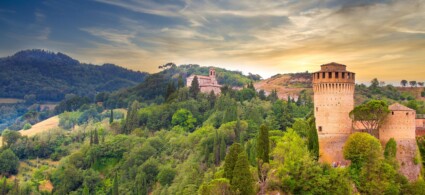
Central to many historical events is certainly Brisighella, home to the Rocca Manfrediana built in the 13th century, which dominates the village from atop a gypsum outcrop and offers spectacular views of the surrounding countryside.
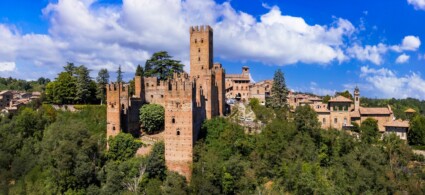
Another medieval gem is Castell’Arquato, a Val d’Arda village known for its historic buildings such as Rocca Viscontea and Palazzo del Podestà, and for having preserved its timeless atmosphere.
Montefiore Conca retains its medieval military layout with the Rocca and sturdy city walls that enclose the village centre with ancient buildings, churches and shops. San Leo, meanwhile, boasts a Rocca that was one of Italy’s most imposing and impregnable fortresses—so much so that it was converted into a prison in the 19th century.
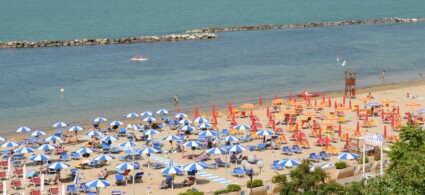
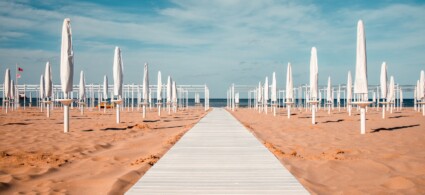
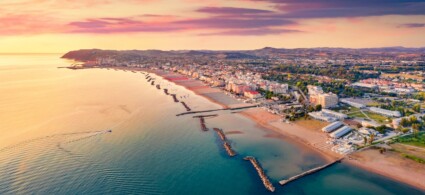
Emilia-Romagna boasts almost 120 km of coastline dotted with towns and seaside resorts well equipped with numerous accommodation facilities. The northernmost section is in Ferrara province, where the “Ferrara Lidos” are located—seven seaside resorts famous for their beaches and the evocative natural environment surrounding them. The most celebrated of the area are undoubtedly Lido degli Estensi and Lido delle Nazioni, two well-equipped beaches highly appreciated by families with children and those seeking comfort and relaxation.
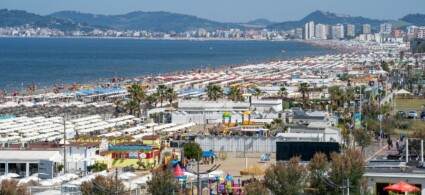
Heading south, a famous stretch of coast known as the Riviera Romagnola begins, boasting some of the region’s most celebrated and sought-after summer destinations. Among the first is certainly Marina di Ravenna, the most famous beach along Ravenna’s coast, featuring a splendid stretch of fine, golden sand washed by crystal-clear waters. Further down is the renowned Milano Marittima beach, considered an exclusive destination beloved by celebrities and famous personalities for its beach clubs.
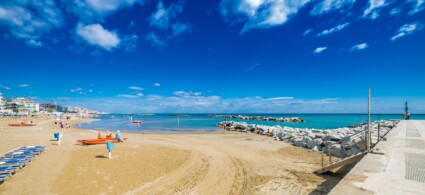
Following on is Rimini, a seaside resort offering equipped beaches, vibrant nightlife and numerous summer events for all ages, plus extensive accommodation options. Another very popular destination known for its nightclubs and entertainment venues is undoubtedly Riccione, the ideal city for those seeking a fun-filled holiday. Finally, before entering Marche territory, you’ll find Cattolica, also called the “Queen of the Adriatic”, with a beach of roughly 2 km offering the perfect combination of relaxation, amenities and entertainment.
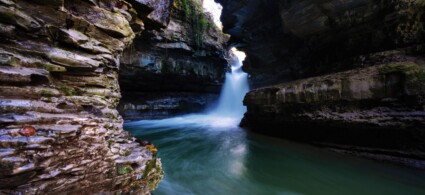
Despite being better known for its beaches, Emilia-Romagna is a region that also boasts magnificent natural landscapes featuring rolling green hills, national parks and nature reserves. The Po Delta Park, stretching between Ferrara and Ravenna provinces, has been designated a UNESCO World Heritage site and is one of Europe’s most important wetlands. Within the park live many species of animals, especially birds such as pink flamingos, herons and the Black-winged Stilt, considered the park’s symbol.
Another area of great interest is the Corno alle Scale Regional Park, which encompasses several peaks including Monte Corno alle Scale (1,945 metres), which in winter attracts winter sports enthusiasts with its ski resorts. In summer, you can hike, horse ride or mountain bike thanks to the extensive network of CAI trails leading to lakes and valleys. Another destination for outdoor enthusiasts in both summer and winter is Monte Cimone, at 2,165 metres the region’s highest peak, offering truly extraordinary panoramas.
Another important park is the Tuscan-Emilian Apennine park, boasting a vast and diverse territory of lush valleys, mountain peaks and small villages rich in history. For its exceptional flora and fauna, the park has been recognised as a UNESCO Biosphere Reserve, home to many endangered species. Finally, worth mentioning is the Sasso Fratino Integral Reserve, where you can admire numerous beech trees, some over 500 years old, making the area a UNESCO World Heritage site.
Emilia-Romagna offers a wide range of guided visits to explore its rich cultural and gastronomic heritage. From tours of UNESCO historic centres in Modena, Ferrara and Ravenna, with their medieval and Renaissance monuments, to food and wine experiences in the lands of Parmigiano Reggiano, Balsamic Vinegar and Parma ham.
There are also Motor Valley visits, with guided tours of Ferrari, Lamborghini and Ducati factories. For nature lovers, guided excursions are available in the Apennines and Po Delta, while art cities offer thematic walking tours exploring local legends and traditions.
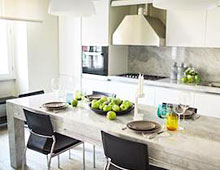
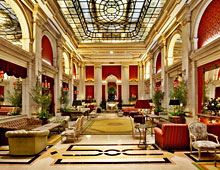
Emilia-Romagna stands out as a region not only for its warm hospitality but also for the impressive number of accommodation options available to suit the needs of all types of travellers.
Bologna, the regional capital, is a captivating destination and an excellent base from which to explore the region, thanks to its airport, major railway station and motorway connections. The city certainly boasts an extensive range of options ranging from large hotel chains to simple yet equally welcoming bed and breakfasts.
Those wishing to visit the northern areas might consider Ferrara, which is ideal not only for art and culture enthusiasts but also for those seeking contact with nature, thanks to its proximity to the Po Delta Park. The historic centre is home to boutique hotels and traditional lodgings, whilst in nearby localities such as Comacchio, you’ll find bed and breakfasts and family-run establishments more readily available.
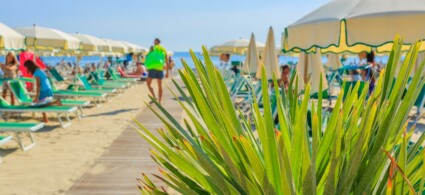
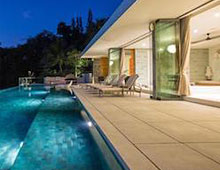
For a seaside holiday, Emilia-Romagna’s coastline boasts numerous beachfront accommodation options including hotels, resorts, bed and breakfasts, holiday homes and campsites nestled in verdant surroundings. Before setting off, it’s worth considering your accommodation carefully, as some towns such as Milano Marittima and Riccione are famous for their lively nightlife as well as their beaches, whilst other localities like Cattolica offer excellent family facilities or peaceful retreats. Whatever type of stay you choose, the important thing, particularly for summer visits, is to book your accommodation well in advance to avoid disappointment.
Emilia-Romagna is well connected to the rest of Italy thanks to its well-developed infrastructure network, making it easy to reach the region by both car and train. The territory is served by some of the country’s major motorways including the A1 (Milan – Naples), the A13 (Bologna-Padua), the A14 (Bologna – Taranto) and the A22 (Modena – Brenner Pass), which provides links to Austria and northern Europe. In addition to these is the Adriatic State Road SS16, which runs parallel to the coast from the Veneto to Puglia, connecting numerous seaside resorts. Other important roads include State Road 9, the Via Emilia, which is considered one of the main arteries as it connects numerous locations in the region with Lodi and Milan.
The region has over 1,600 km of railway lines and is an important hub thanks to Bologna Centrale station, which serves as the main interchange for high-speed trains and connects many cities in northern and southern Italy. The Emilian capital is indeed well connected with Milan, Venice, Rome and Naples as well as with various European cities. Along the coast, the Adriatic railway Bologna-Ancona runs, allowing connections between the main coastal towns of both regions.
The region is also home to four airports, with the main airport being Guglielmo Marconi in Bologna, which offers domestic, European and intercontinental flights. In addition to this are Rimini’s Federico Fellini airport, Forlì airport and Parma airport – all smaller but equally efficient.
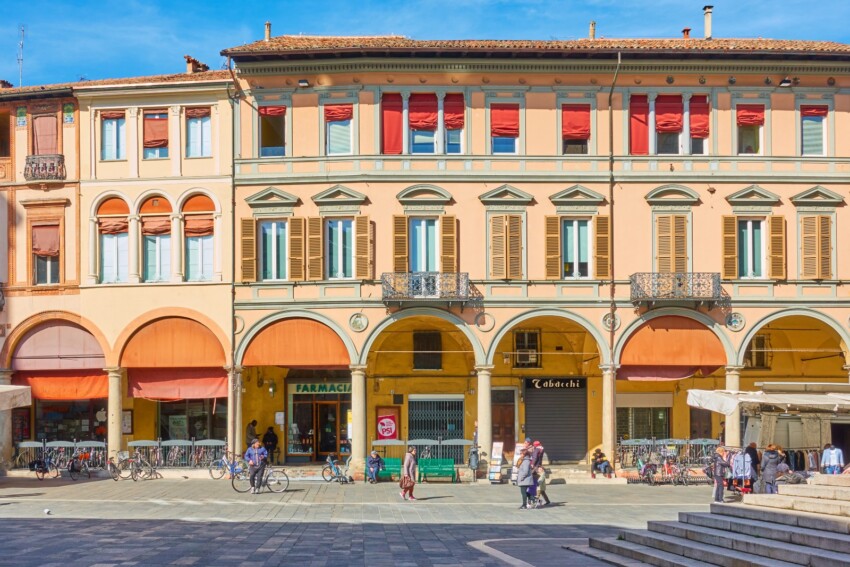
Emilia-Romagna is one of Italy’s most fascinating and historically rich regions, located in the heart of the peninsula and boasting an extraordinary variety of landscapes, destinations, cultures and traditions. Thanks to this, it’s fair to say the region is a destination offering attractions throughout the year, with things to see varying depending on your type of trip and personal preferences.
For a stay focused on history, culture and excellent food, the shoulder seasons such as spring and autumn are the best times to visit. In spring, temperatures begin to rise and nature awakens, making it a pleasure to visit art cities such as Bologna, Ferrara, Parma and Modena, which also host cultural events and festivals tied to local culture and gastronomy. In autumn too, mild temperatures and autumn foliage create spectacular landscapes, whilst many food and wine events are organised celebrating wine or seasonal specialities such as mushrooms, truffles and chestnuts.
Summer is the ideal season for those seeking a seaside break and relaxation, thanks to the numerous resorts along the Adriatic Riviera, or for outdoor activities surrounded by the natural beauty of the parks. The region’s beaches are considered amongst the most famous both in Italy and abroad, and are renowned for their numerous accommodation facilities, high-quality services and vibrant social scene. Many towns come alive with summer events, concerts and festivals, whilst others, thanks to their numerous nightclubs, welcome those seeking nightlife entertainment from across the peninsula.
Winter in Emilia-Romagna can be cold but charming, as there are not only several ski resorts but also art and history-rich towns that are delightful to explore in their winter guise. Moreover, in December many towns light up with decorative displays and Christmas markets, and squares come alive with events. This is certainly an excellent time to visit mountain areas such as Corno alle Scale or Monte Cimone, where you can enjoy winter sports or relax in a mountain lodge.
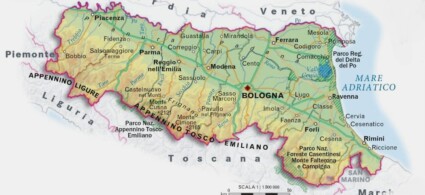
Emilia-Romagna is located in northern Italy and borders Lombardy and Veneto to the north, Lombardy and Piedmont to the west, Liguria, Tuscany, Marche and the Republic of San Marino to the south. To the east, the region overlooks the Adriatic Sea and boasts 120 km of coastline. Its central position and connections make it easily accessible from many other Italian regions: if you’d like to get a better sense of its geography, take a look at the map of Emilia-Romagna.
 Hotel
Hotel 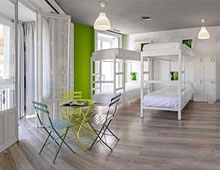 Budget accommodations
  Apartments
  Family Hotel
  Luxury Hotel
  Resorts